
Debate ‘Serbia on the Verge of Freedom 2026’: We must turn the hope for change into a decision.
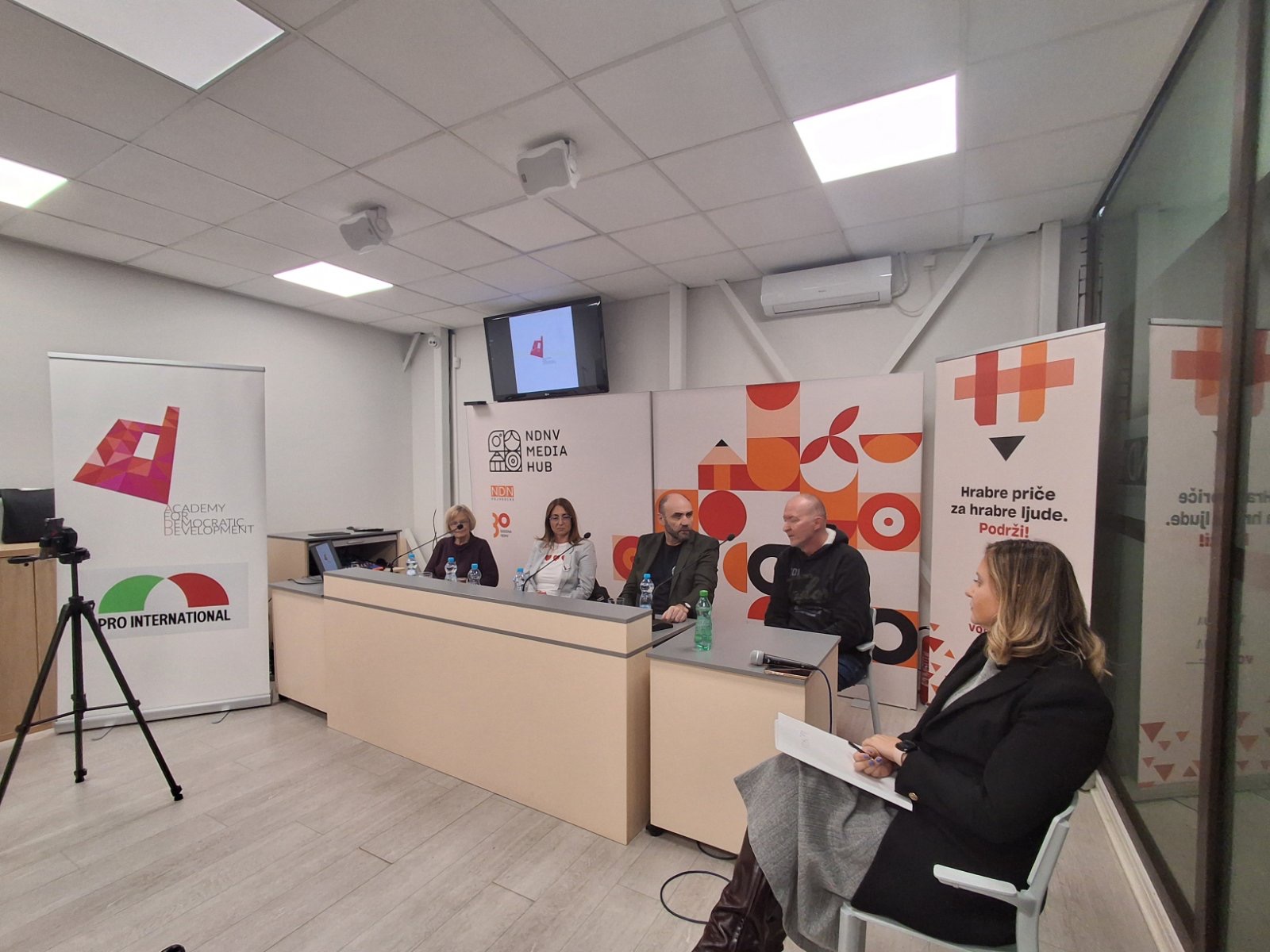
At the panel discussion “Serbia on the Verge of Freedom 2026”, organized by the Academy for Democratic Development (ADD) with the support of the foundation ProInternational from Netherlands, and held at the premises of the Independent Journalists’ Association of Vojvodina (NDNV), Panović stated that in Serbian society, “tragedies dictate political dynamics, rather than political motives.

As he stated, during tragedies, “deep societal contradictions come to the surface” – such as the “1 in 5 million” protests following the attack on Borko Stefanović, the “Serbia Against Violence” movement after the tragedies at the Ribnikar school and the villages near Smederevo and Mladenovac, and now the large social movement that emerged after the collapse of the canopy which claimed 16 lives in Novi Sad.
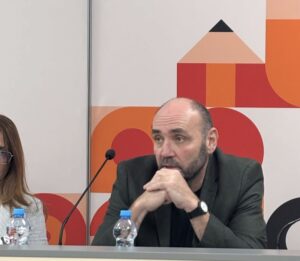
Panović assessed that the situation in Serbia is a “sociological experiment,” noting that it is very difficult to obtain accurate results in public opinion polls because only a fraction of people give clear and unambiguous answers, while the majority calculates and provides socially desirable responses.
“There is also a sort of misconception – that the government is only supported by blackmailed, unfortunate people with no money, who stand to lose their daily wages and jobs if they don’t attend a rally. There are, of course, many of those. However, the government’s main support stems from that milieu of ‘decent people’ you meet every day, who aren’t actually under much coercion, whose jobs don’t directly depend on it, and who do not live in poverty,” Panović said.
According to him, the government’s main social base consists of a “reliable 600,000 public sector employees and 1.5 million pensioners,” but the government remains enduring and stable due to the massive defection of an entire echelon of cadres and leaders from the former regime’s parties to their ranks.
Marija Vasić: “Elections are the final step that should bring down the entire tower”
Suspended sociology teacher at the “Jovan Jovanović Zmaj” high school in Novi Sad, Marija Vasić, stated she is optimistic and that the elections on October 25 are the “final step that should bring down the entire tower,” adding that it was preceded by “a thousand steps.”

She reminded that on November 20, 2024, only the Novi Sad opposition blocked the work of the prosecutor’s office, “naively thinking that, 20 days after the accident, they would initiate some sort of legal process,” and that back then there was no student movement yet, but merely twenty or so people who stood in front of the prosecutor’s office for a week.
“And looking at it now, try to see the difference, the sheer scale of it, and how many people have actually freed themselves. Even people working in public institutions, who have perpetually been in a subservient position, are now openly stating what they think and who they will vote for,” Vasić said.
Pajvančić: “Prevent fraud at small polling stations”
Retired professor of constitutional law Marijana Pajvančić assessed that for the elections, it is “necessary to prevent fraud at small polling stations, where half the work is already done.”
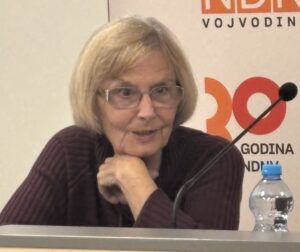
Speaking about the diaspora, Pajvančić pointed out that more than 100,000 voters had registered, that over 20,000 applications were not even accepted, and that there are 35 polling stations in Bosnia and Herzegovina—whereas previously there were 19—located in schools rather than in consulates and embassies.
“Where we have consulates with 1,000 or more registered people, or an embassy, a polling station is not being opened. So, this tells you that there is actually a present fear that this cannot be controlled,” Pajvančić said.
Source: BETA


